Guanajuato Weather Current conditions as of 30/08/2008 59° FLow: 57° / High: 76°
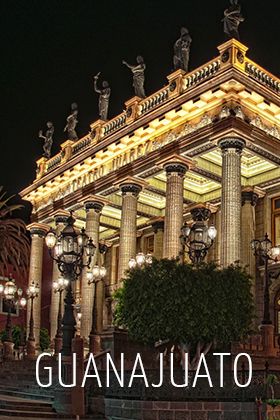
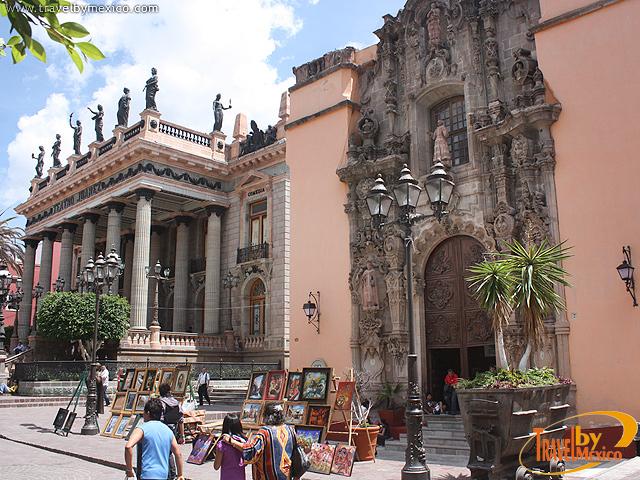
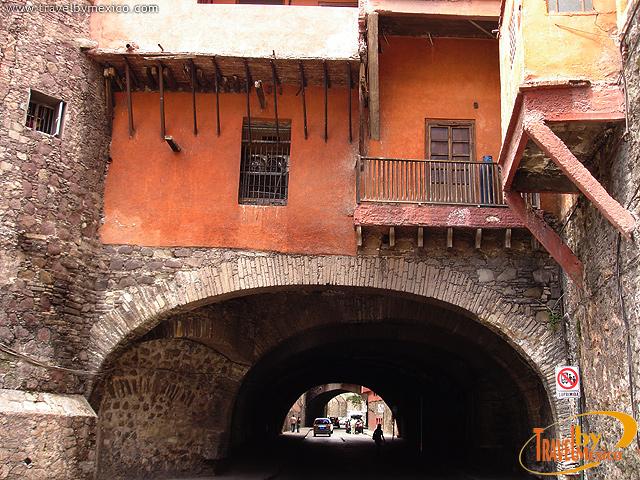
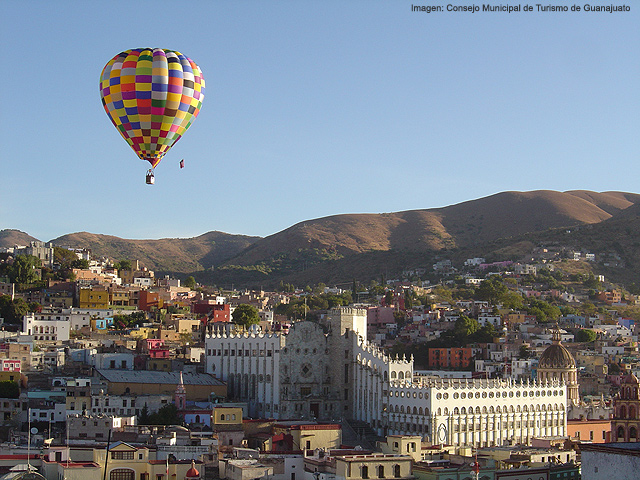
Located at the bottom of a deep valley, expanding towards the hillside of the mountain, shines a city with an out of line aesthetic of outstanding imagination and beauty. The buildings follow each other some with different shapes and dimensions, and others giving way to the lavishness of different façades where stones adorn palaces and big houses with an old presence. Guanajuato is an incomparable city: a historic jewel of Mexico where the arts and culture spring in various rich ways, resounding in echoes of tremendous range through the passing of the new generations.
According to some etymologists, the name Guanajuato comes from the tarascan term “Quanashuato”, a term composed by “Quanas”, frogs and “Huuato” mountainous place, while the particle “To”, implies the abundance of something. It is understood that the meaning of Quanashuato is the “mountainous place where there are alot of frogs” or simply “place full of frogs”. By the way, it is important to mention that the effigy of that batrachian, curiously molded in two enormous rocks due to the erosion, inspired the chichimeca natives of the area to worship them. It is very probable that for that reason, they decided to settle in such a steep territory, since the geography of such a course place was not an ideal site for the establishment of a town. Nevertheless, through time, once the Spanish were settled in New Spain, the exploitation of the mines in Guanajuato would give the richness and splendour that have been dinguishing this place since colonial times.
This is probably the only city where we may find the purest trace of the Spanish, either in its streets and alleys, plazas, gardens or in its great buildings. And it is precisely the appeal of the public places of the city, so suitable to serve as natural theatres, which motivated Mr. Enrique Ruelas, Director of Dramatic Art in the University of Guanajuato, to utilize as stage the Plaza de San Roque for the performance of plays inspired by the work of don Miguel de Cervantes Saavedra. This would begin the tradition known as the Cervantino Short Plays, anteroom for the organization in 1972 of the first Cervantino International Festival, a multitudinous event that is distinguished nowadays as the most important festival of the arts in Latin America.
Without a doubt Guanajuato is one of the most charming cities in Mexico, it captures the senses of the visitors with beautiful spaces encircled and adorned by streetlamps. For example the Garden de la Unión, which received this name in 1861 and stands out for being the first that had electric lighting. Also, in 1861 the Garden Reforma would be openned in what served formerly as the courtyard of the Temple of Belén. The arch standing in the main entrance was built by the architect José Noriega towards the year 1875. The Garden Embajadoras is formed by two gardens: the first, being circular with a carved fountain in the middle, and the second, rectangular, where standing is a monument of the national flag, adorned also by the figure of a military man and a miner.
About Travel By Mexico : We provide recommendations for hotels, resorts, inns, vacations, travel packages, vacation packages, travel guides, city maps, road maps, videos and much more.
Principal | Destinations | States | Hotels | All Mexico | Maps | Videos | Travel Blog | Contact Us | Sitemap | Advertisement
Travel By Mexico is not responsible for content on external web sites.
Travel By Mexico, SA CV, All rights reserved © 2007